







How to Adopt AI in Your Organization Without Making the Most Common Mistakes
Failure and success patterns in AI adoption, a practical decision framework, safe use cases, and minimum viable governance for development teams.
Code
Inside articles there are more settings: width, font size, series position and code.
Saved in this browser.
Failure and success patterns in AI adoption, a practical decision framework, safe use cases, and minimum viable governance for development teams.
Copilot moves to token billing, JetBrains cuts quotas, Claude raises costs with new tokenizer. Analysis of the economic divide AI is opening in 2026.
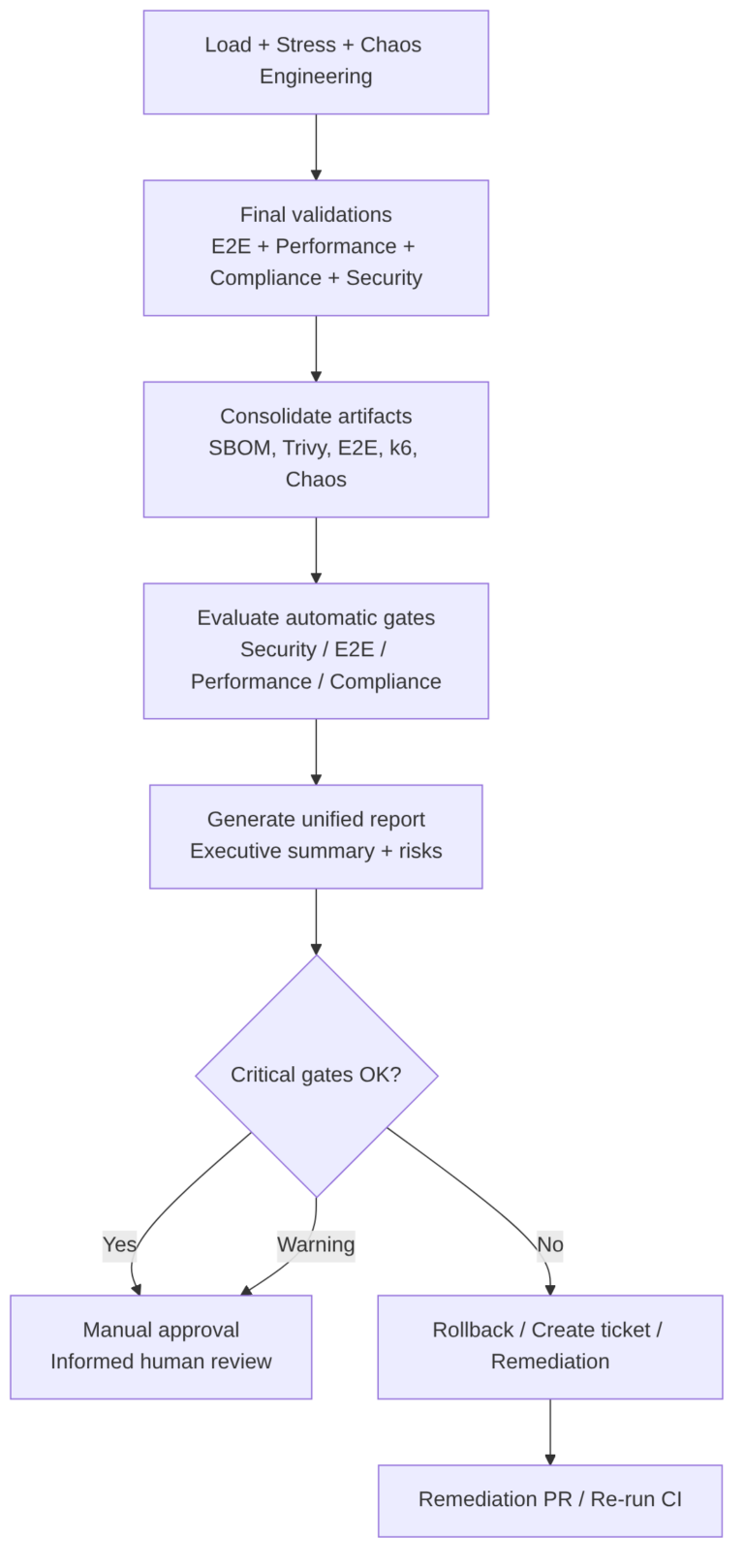
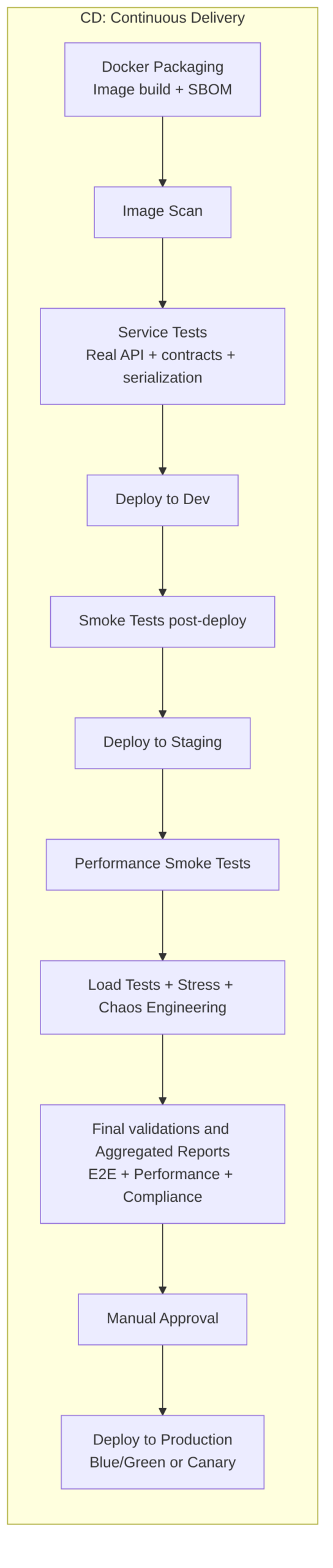
Consolidation of all pipeline gates, informed human approval, and progressive deployment to production with Blue/Green or Canary.
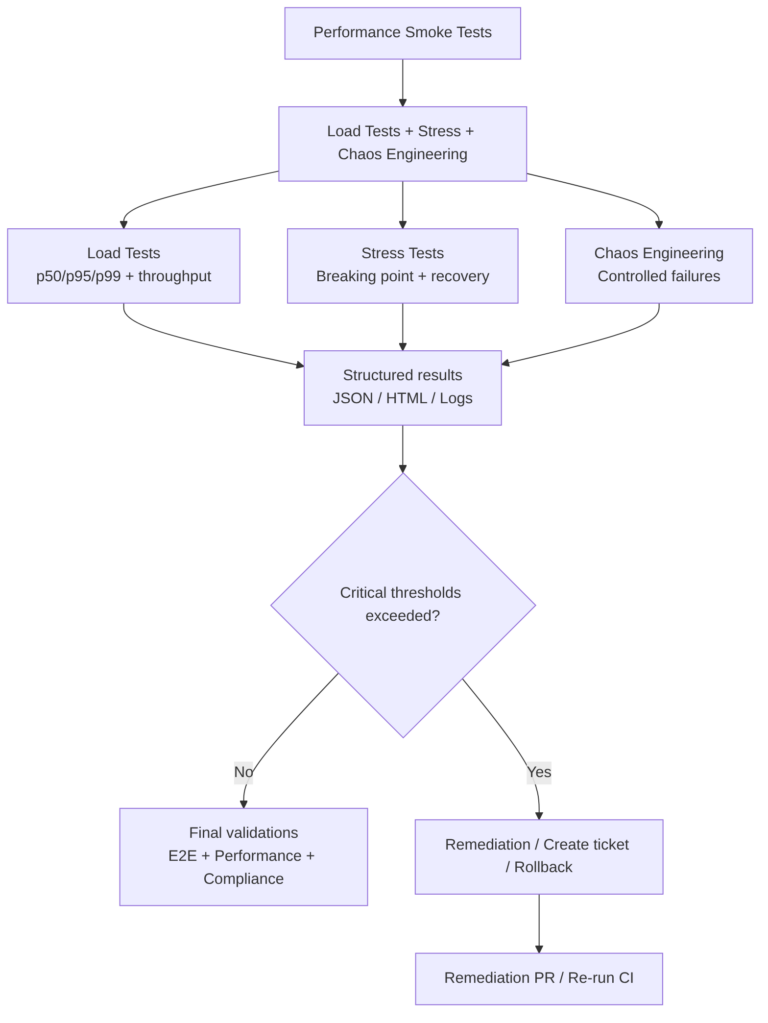
Real resilience validation: load tests, stress tests, and chaos engineering to guarantee stability, scalability, and fault tolerance.
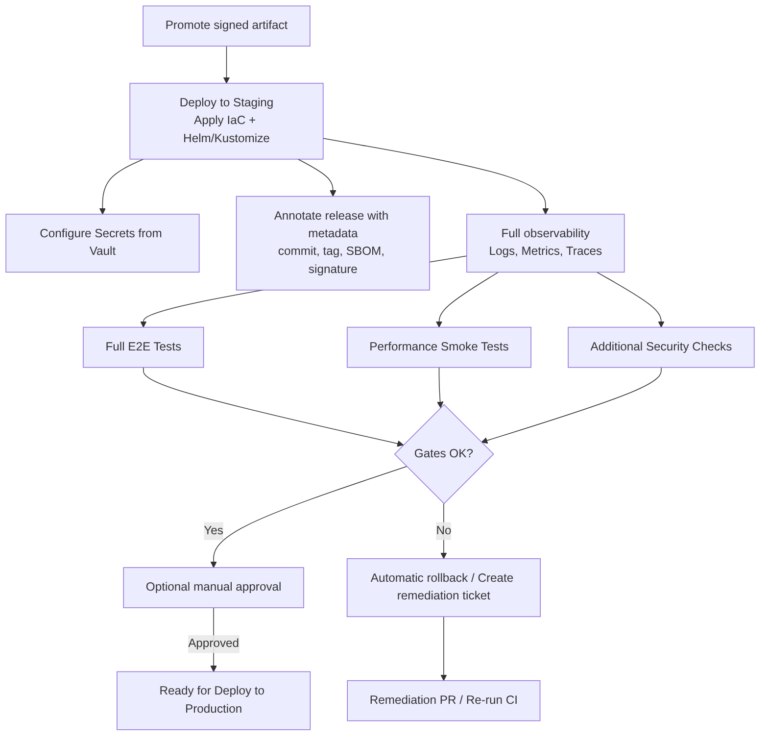
Pre-production deployment with production parity, E2E and lightweight performance validation, and manual approval before production.
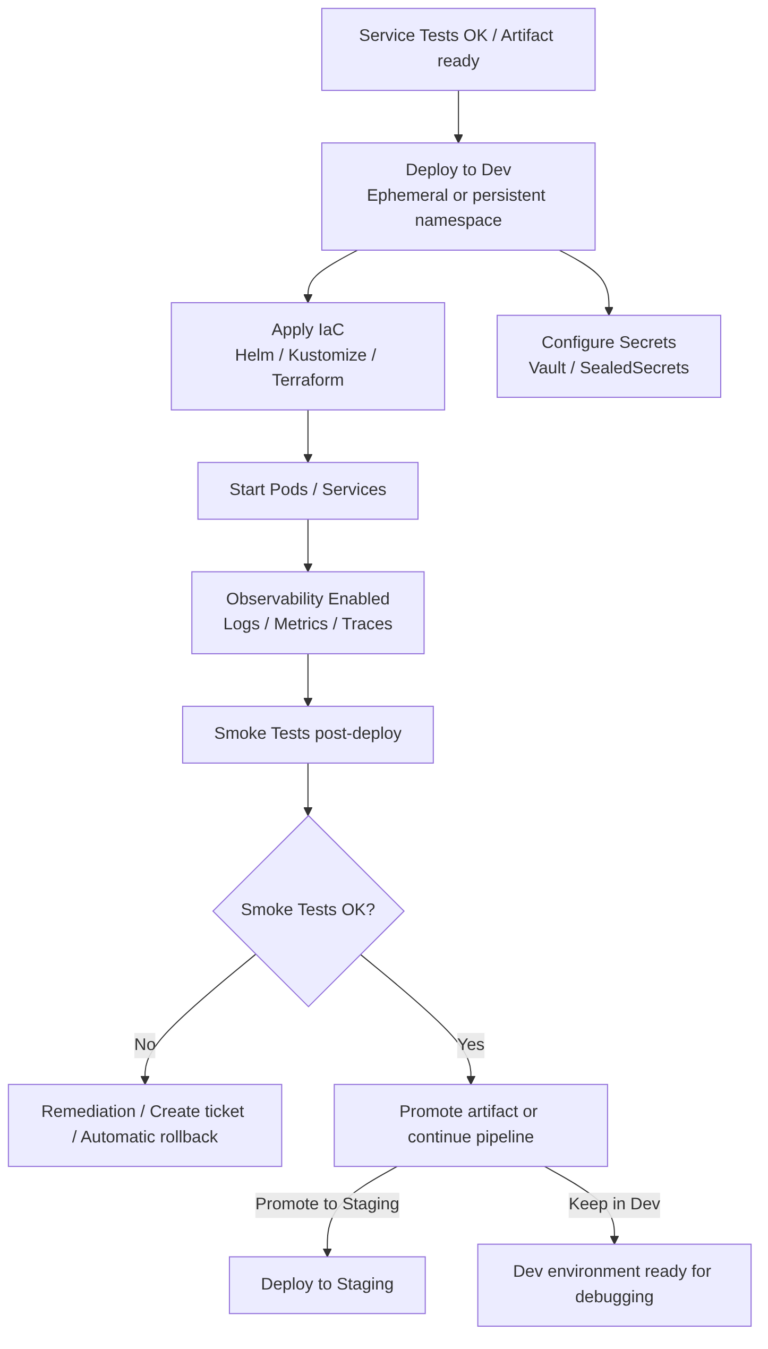
Deployment of the verified artifact to the development environment and quick validation with smoke tests to detect obvious failures.
Container image vulnerability scanning and service validation with contract tests, endpoints, and dependency checks.
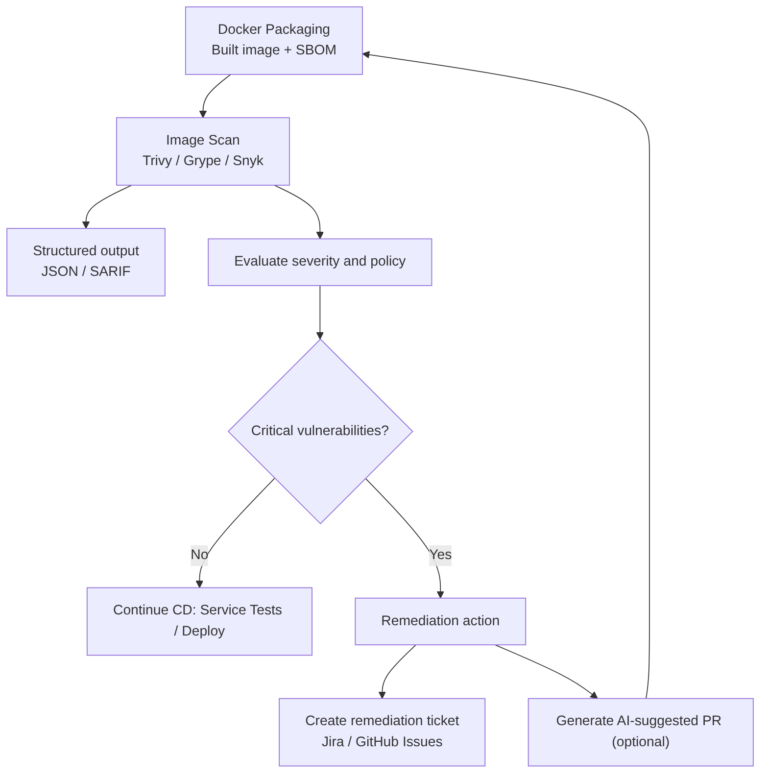
Start of the continuous delivery cycle: Docker packaging, SBOM generation, image signing, and the concept of remediation.
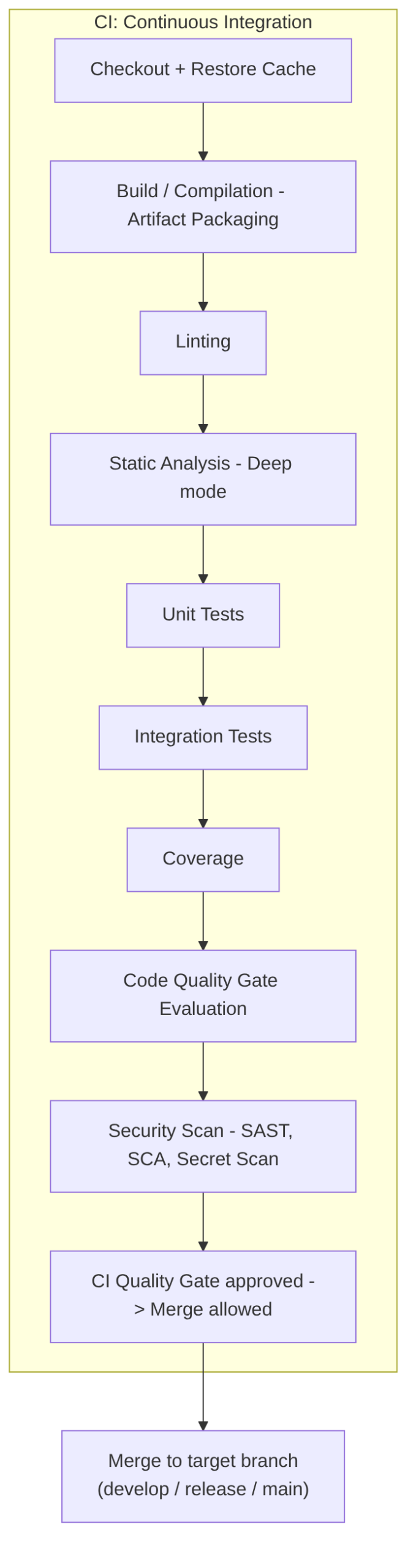
The stages of continuous integration: linting, build, static analysis, tests, coverage, quality gate and security scan, with the role of AI in each one.
The complete CI/CD pipeline and the checks that run before CI: fast static analysis, linting, formatting, conventions, contracts and AI review.
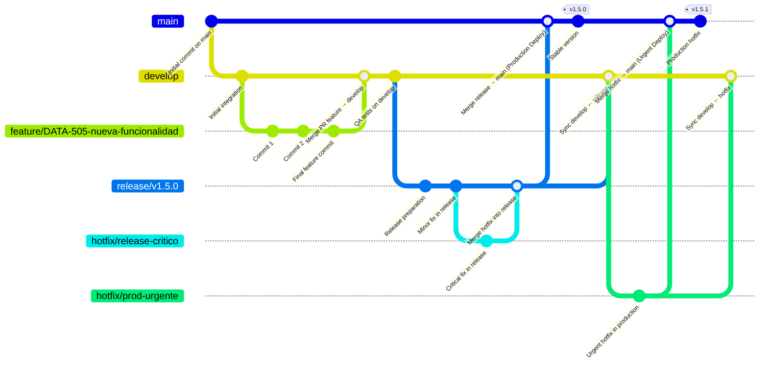
Branching strategies, GitFlow models, the modern AI-assisted developer workflow, and the complete Pull Request process in professional CI/CD environments.
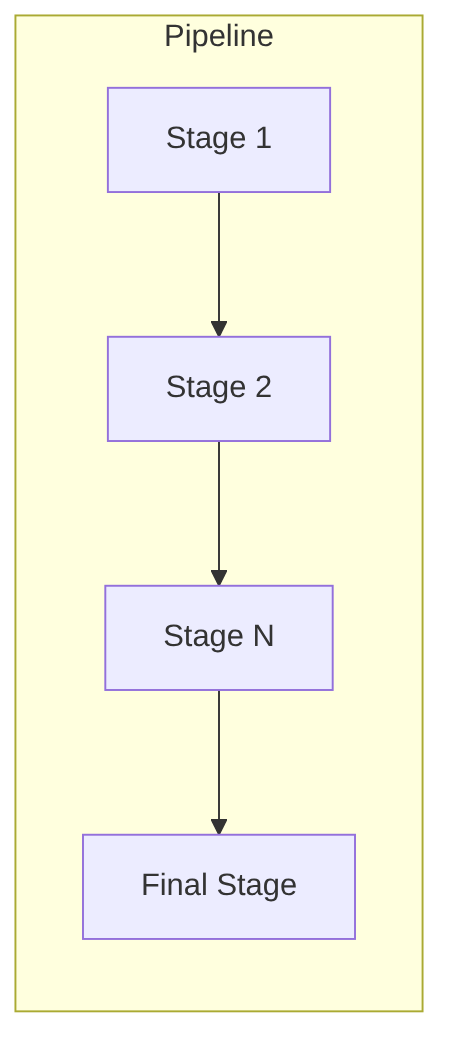
The building blocks of any CI/CD pipeline: pipelines, gates, jobs, stages and steps, and what they are called in GitHub Actions, GitLab CI and Jenkins.