
Gson (JSON) in Java, with Examples
GSON is a Java API developed by Google to convert Java objects to JSON (serialization) and JSON to Java objects (deserialization). Learn it with examples.
Code
Inside articles there are more settings: width, font size, series position and code.
Saved in this browser.
GSON is a Java API developed by Google to convert Java objects to JSON (serialization) and JSON to Java objects (deserialization). Learn it with examples.
Learn the units of information: bit, byte, kilo vs kibi, GB vs GiB. Understand the old and new systems so nobody fools you about storage or speed.


In this article we describe a series of recommendations and best practices for programming in Python (version 2.7) so your code runs faster and cleaner.

In this tutorial we will explain how to configure a proxy server for scraping websites anonymously through the TOR network
The bit, the basic unit of digital information. It represents two states: the binary system. Something so simple, yet important and full of potential.
Learn Hamming distance, Hamming weight, Hamming space and spheres, plus how error-correcting codes detect and fix errors, with Hamming(7,4) as the example.
Hamming code to detect and correct errors. Step-by-step examples for fixing errors using redundancy bits and the syndrome matrix. Learn how it works.
Business Intelligence turns data into information and information into knowledge for business decisions. See it in action analyzing Spanish soccer results with Power BI.
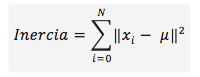
One of the problems when applying a Clustering method (K-means or EM) is choosing the number of Clusters. Learn the elbow method, dendrograms and the gap.
Hash Table explained simply. What is a Hash Table and how does it work without writing code? A key type of "data structure" every developer should know.
The check digit covers several hash codes, such as the parity bit, the digit generated by the Luhn algorithm, the verification letter of national ID numbers, and more.
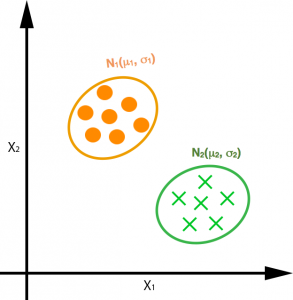
Expectation-maximization is a statistical clustering method similar to K-means, but with a probabilistic approach. Learn how it works with Python examples.