
Python Course – 1. Introduction
Start learning Python from scratch: values, variables, input and output, and comments, with theory PDF, videos and a first exercise to practice.
Python is a language with a clear, simple syntax, as close to natural language as possible.
With Python you can develop practically any application you can imagine, from:
- Big Data
- Artificial Intelligence
- Games
- Data analysis
- Cybersecurity
- Blockchain
- Internet of Things
- Desktop applications
- Complex server scripts
Theory
Skip to PDF content1.1- Introduction
Starting from the simplest piece of data, we’ll be able to transform it with Python and extract a lot of hidden information from it.
1.2- Value and Variable
The basic building blocks of programming: value and variable. We’ll also learn how to operate on them using shorthand operations.
1.3- Input, Output
Input and output will be essential for getting data, processing it (which is what we’ll program with Python) and returning it.
1.4- Comments
Comment your code to document it or to keep a certain line from running.
Exercises
Exercise 1.1-input_print.py
Create a program that reads a text from the keyboard and prints it.
Hint: use the Python 3 documentation Python 3 documentation (Python docs) to find the “input” method
Example of what it should show in the terminal:
Escribe un texto: hola
hola“Python Course – 1. Introduction” by Ramón Invarato at jarroba.com, licensed under Creative Commons Attribution-NonCommercial-ShareAlike 3.0. Registered at Safe Creative.

You may also like

Python Course – Part I – (Video) “Setting Up Eclipse”
Learn how to set up Eclipse to program in Python with PyDev. Watch the video tutorial and try a simple script to check that everything works.
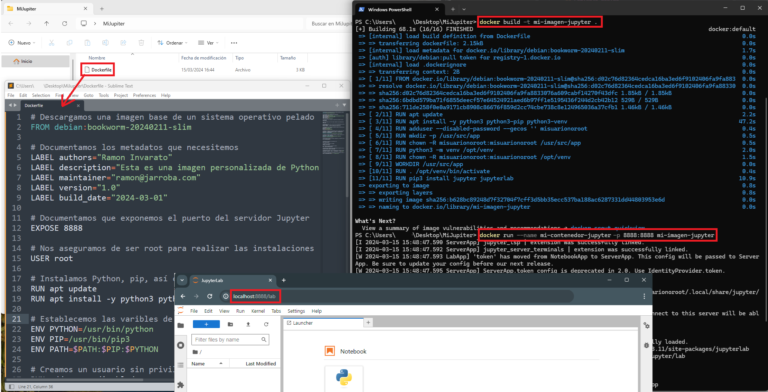
Advanced Dockerfile: Multi-Stage Builds, Registries, and Tricks
Free Docker course. Expert Docker tricks: multi-stage builds, optimizing images, faster build times, and distributing images through Docker registries.
Leave a comment